


Press releases - 2026 January 26
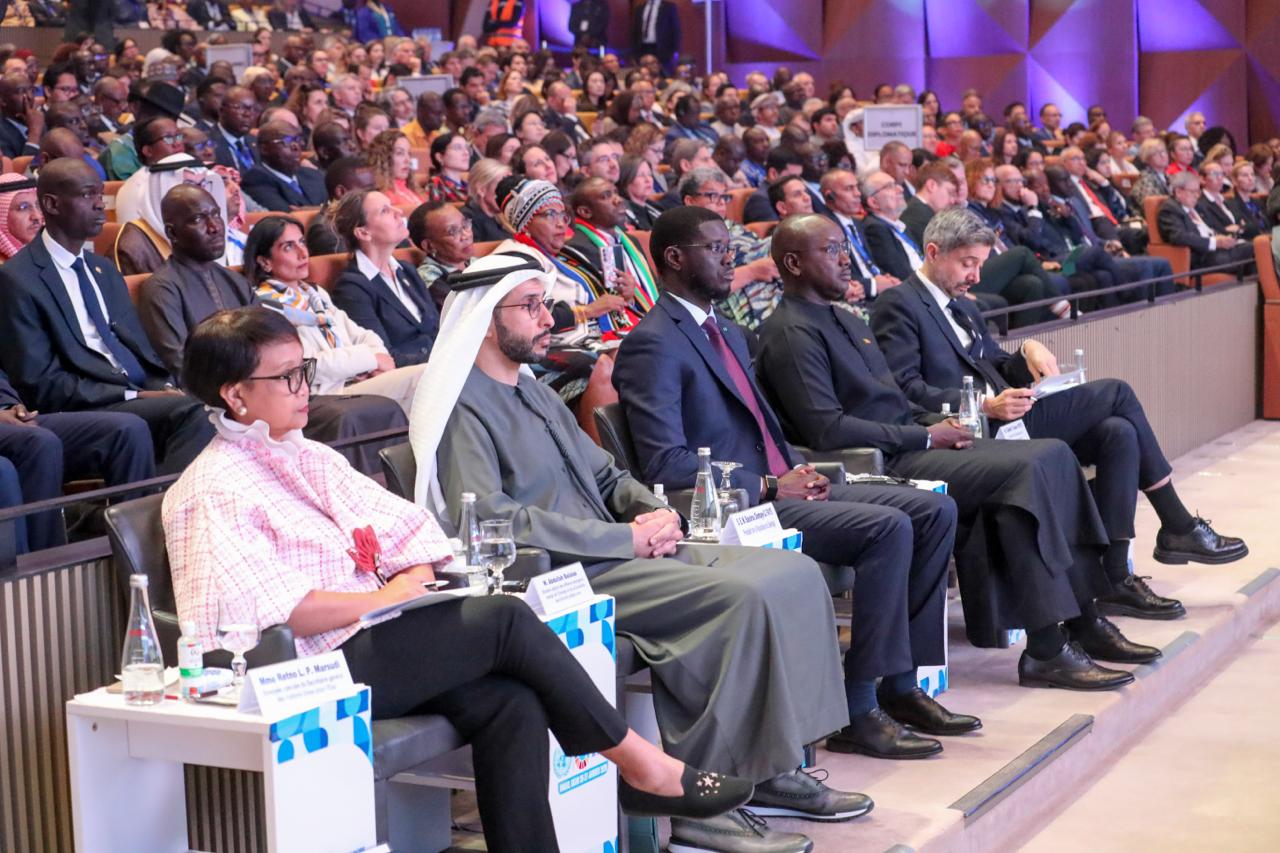
The President of the Republic chaired, on 26 January 2026, at the Abdou Diouf International Conference Centre (CICAD), the opening of the High-Level Preparatory Meeting for the United Nations Water Conference, scheduled for December 2026 in Abu Dhabi.
In his address, the Head of State emphasized that water is a fundamental issue of human dignity, public health, social stability, and shared prosperity. He recalled the urgency of collective action in the face of worsening water and climate crises, which particularly affect the most vulnerable countries.
This high-level meeting marks a decisive milestone in the preparation of the 2026 Conference. It aims to build an ambitious roadmap based on concrete commitments, improved coordination of initiatives, and increased mobilization of financing, so that water may become a true factor of peace, development, and resilience worldwide.
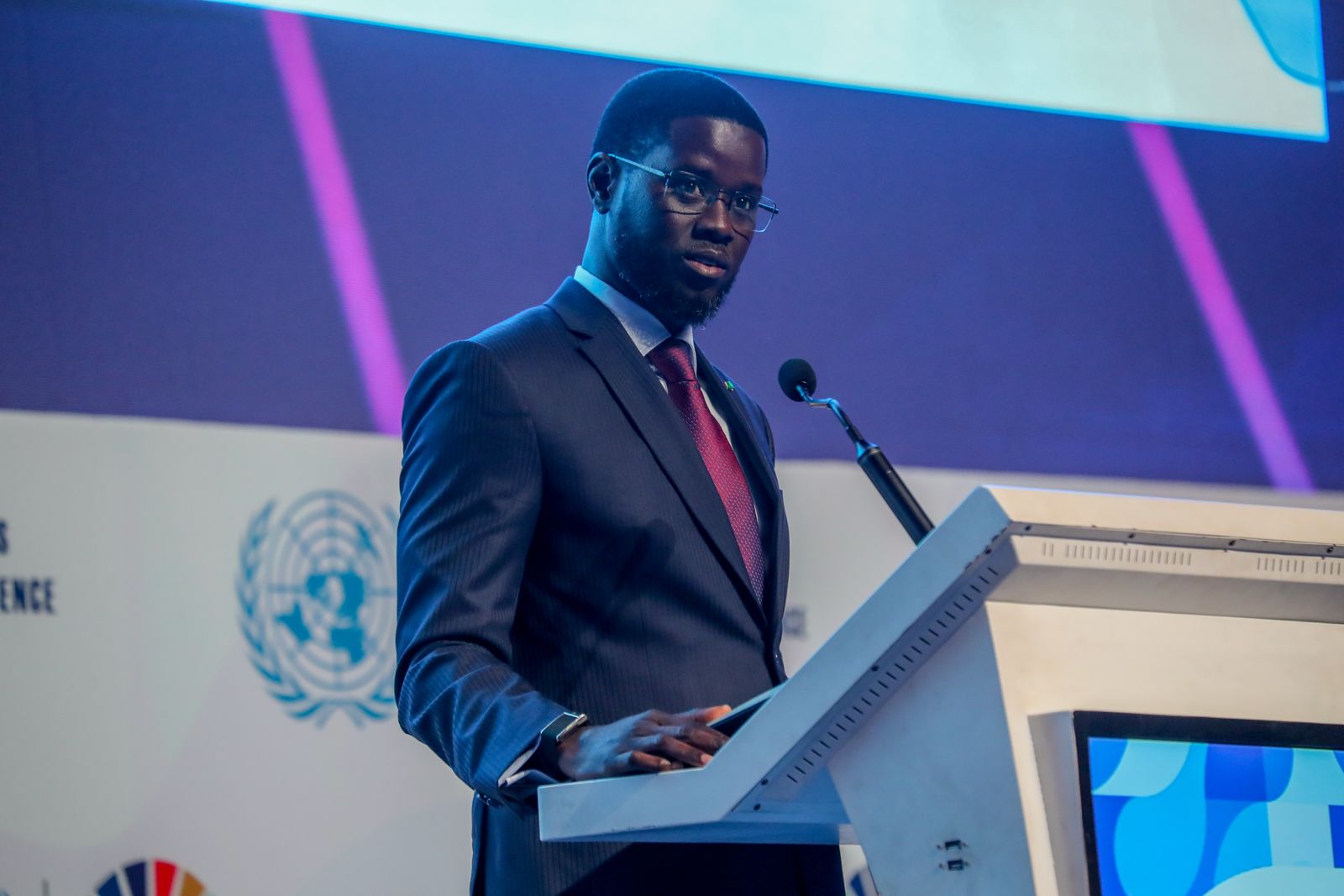
26 January 2026 – Only the spoken version is authoritative
Address by the President of the Republic at the opening ceremony of the High-Level Preparatory Meeting for the United Nations Water Conference
Ministers,
Ambassadors,
Distinguished representatives of international organizations,
Dear technical and financial partners,
Dear guests,
Ladies and Gentlemen,
I would first like to extend a warm welcome to our hosts and wish them a very pleasant stay in Senegal. Thank you for coming to take part in this meeting.
Among the succession of important dates and milestones capable of positively impacting people’s lives, 26 January 2026 stands out as a landmark, with the holding here in Dakar of the High-Level Preparatory Meeting for the United Nations Water Conference scheduled for December 2026.
Your presence in Dakar testifies to the political importance that the international community attaches to water and sanitation—not only as sectoral issues, but also as essential foundations of human dignity, public health, social stability, and the shared prosperity of nations.
Water is indeed a vital resource for humanity and nature alike, indispensable to maintaining the planet’s balance and achieving the Sustainable Development Goals.
Yet, the water crisis is a global reality.
According to the United Nations, 2.2 billion people still lack access to safely managed drinking water; nearly 3.5 billion remain without adequate sanitation services; and close to 4 billion people experience severe water scarcity for at least one month each year.
Africa is particularly affected by this crisis, with 40 percent of its population lacking access to drinking water and more than 70 percent without basic sanitation services.
This situation is morally unacceptable, and as long as it persists, our collective responsibility remains engaged, because water crises fuel food crises, weaken economies, displace populations, and exacerbate tensions.
Regrettably, the crisis is worsening with the acceleration of climate change, which severely impacts the intrinsic link between water and climate since water influences the climate just as climate determines the availability and quality of water resources.
Climate change significantly disrupts the water cycle, leading to droughts and floods caused by insufficient or excessive rainfall, the melting of ice due to global warming, and changes in sea levels.
Water itself is a major climate actor, and its disruption affects, in particular, freshwater availability, health, agriculture, energy, education, and biodiversity.
In the face of this growing vulnerability of life, the cost of inaction is immense. It is measured in human lives lost, development opportunities compromised, social fractures deepened, and at times, peace threatened.
That is why investing in water is not merely about financing infrastructure; it is also about investing in climate resilience, preventing tensions and conflicts, and fostering global stability and prosperity.
It is therefore essential to strengthen advocacy efforts so that water remains at the heart of climate action and the international agenda.
Ladies and Gentlemen,
Sustainable Development Goal 6, dedicated to water and sanitation, is a strategic lever for achieving all the SDGs. Advancing it directly contributes to the implementation of the 2030 Agenda.
However, four years before the deadline, it must be acknowledged that we are far from the targets set, even though progress has been made on several indicators demonstrating that accelerated performance remains possible if we act on the right levers.
Africa lies at the heart of these challenges. Despite its vulnerability to water and climate shocks, the continent rich in resources and youth—is also a source of solutions, opportunities, innovation, and endogenous knowledge.
In this regard, I welcome the decision of the African Union to proclaim 2026 as the “Year of Water in Africa,” in line with the forthcoming adoption of the “New African Water Vision,” led by the African Ministers’ Council on Water (AMCOW), currently chaired by Senegal.
This ambition reflects a determination to make water a strategic lever for social, economic, and environmental transformation, in service of the African Union’s Agenda 2063 and the continent’s water security objective.
Fully aware of all these challenges, including their geostrategic dimension, Senegal committed early on to hydro-diplomacy.
The co-organization of the United Nations Conference alongside the United Arab Emirates is part of this dynamic to make water a source of peace and development rather than a source of conflict.
I would like here to commend the quality of our partnership with the Emirati co-presidency, founded on trust and a shared vision that places water at the heart of the international agenda for improved access and peaceful management of water resources.
This partnership symbolizes the strength of multilateralism through dialogue and cooperation.
Together, we aim to make this Conference a moment of concrete commitments and action.
At a time when the United Nations is engaged in deep reflection on strengthening multilateralism, the issue of water constitutes a tangible test of our collective ability to deliver real results for people.
Advancing the water agenda also means restoring confidence in multilateral action and demonstrating that international cooperation remains a credible lever for solutions.
The 2026 Conference must not be just another meeting, but a turning point through which the international community acts to build inclusive and sustainable responses to water and climate challenges mobilizing States, local authorities, the private sector, civil society, scientists, local communities, youth, and women, in a powerful spirit of solidarity and complementarity.
It must also deliver innovative solutions adapted to African realities; concrete, measurable commitments monitored over time; improved coordination of initiatives to avoid fragmentation; and increased mobilization of financing to enable the necessary investments.
Investments, particularly in infrastructure, are essential for water availability, management, and use.
Needs are considerable, but returns on investment are equally significant especially in decent jobs, inclusive growth, reduced climate risks, and social and political stability.
However, the required investment effort cannot be sustainable without renewed reflection on financing mechanisms, including access to concessional financing, financial innovation, and consideration of the burden of debt.
Investing in water means investing in a global public good; it therefore calls for collective, equitable responses adapted to each country’s capacities.
Yet, no lasting transformation will be possible without the people themselves. With their endogenous knowledge, local communities and Indigenous peoples are the first custodians of water. Their deep understanding of territories, natural cycles, and ecological balances is an irreplaceable asset.
Science and data, intelligently harnessed today, must engage in dialogue with local and traditional knowledge.
Young people must be at the heart of solutions, as carriers of innovation, energy, and hope.
Women, who are on the front line of daily water management, must likewise be fully recognized as agents of change.
It is through such an inclusive dynamic that we will be able to meet the challenges and achieve the objectives of the Water Conference.
I therefore welcome the great diversity of stakeholders gathered here in Dakar for the co-construction of a relevant and effective roadmap.
Over the next two days, you will have the opportunity to consolidate the six interactive dialogues that will structure the 2026 Conference around the following themes:
Water for people;
Water for prosperity;
Water for the planet;
Water for cooperation;
Water in multilateral processes;
Investments for water.
I sincerely hope that the Dakar meeting will pave the way for the success of the Abu Dhabi Conference, through the emergence of a shared vision, concrete commitments, and a credible roadmap.
Accordingly, I hereby declare open the proceedings of the High-Level Preparatory Meeting for the United Nations Water Conference, scheduled to be held from 2 to 4 December 2026 in Abu Dhabi.
Thank you for your kind attention, and I wish you fruitful deliberations.