


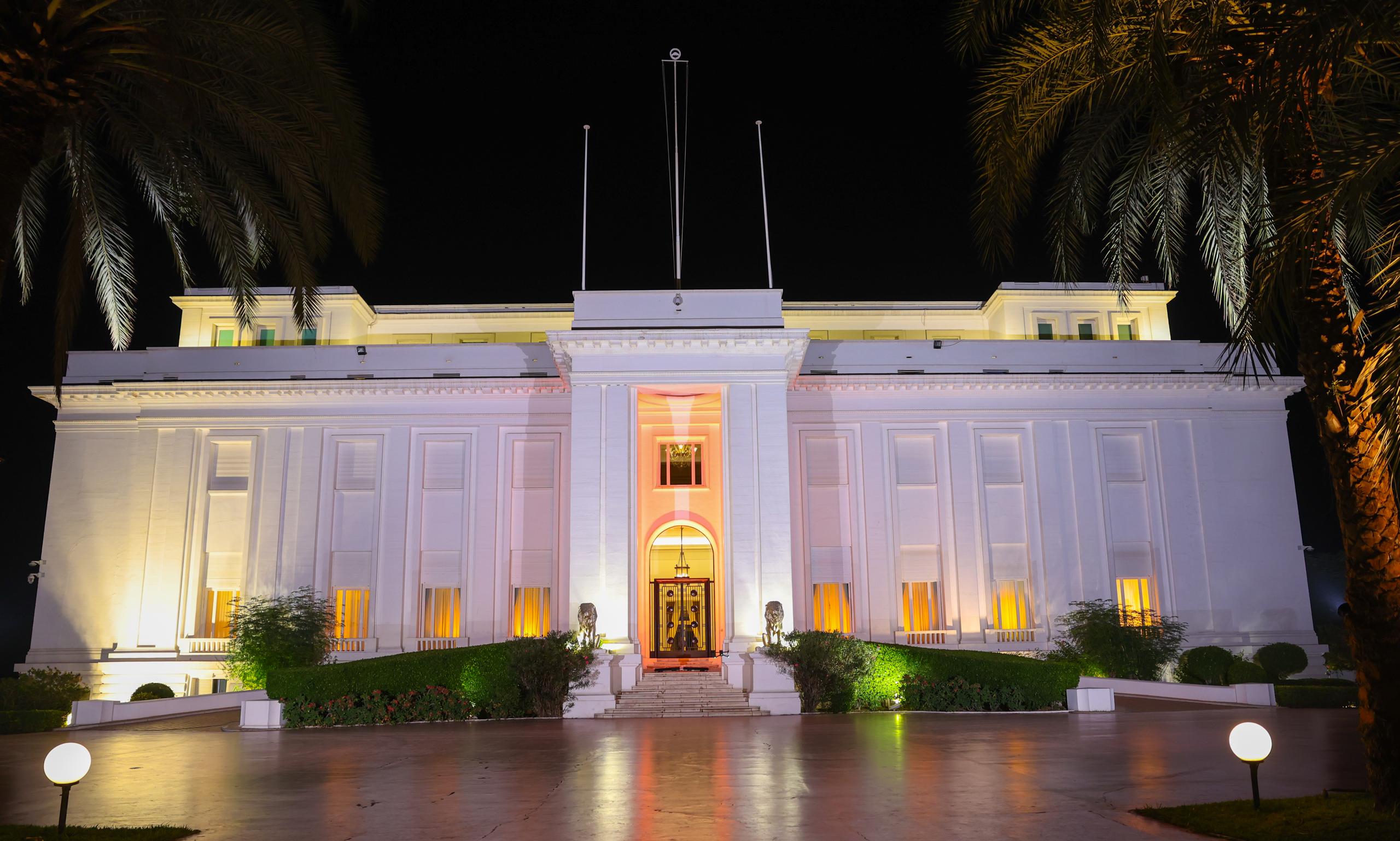
The Council of Ministers was held on Wednesday, May 6, 2026, under the chairmanship of His Excellency Mr. Bassirou Diomaye Diakhar FAYE, President of the Republic.
COMMUNICATION BY THE PRESIDENT OF THE REPUBLIC
The Head of State delivered a communication on the following matters:
Follow-up on the demands of trade union confederations
At the beginning of his address, the President of the Republic announced that he had received, on April 27, 2026, the 2025 report on the state of social dialogue and, on May 1, 2026, in the presence of members of the Government, the lists of demands submitted by trade union confederations. On the occasion of Labour Day, he congratulated all workers in Senegal for their contribution to national development and the well-being of the population, before requesting the Prime Minister, the Minister in charge of Labour and the Civil Service, and each minister to diligently examine the demands falling within their respective mandates and sectors of responsibility.
The Head of State welcomed the adoption of the draft Labour Code and Social Security Code. In this regard, he praised the sense of responsibility shown by trade unions and employers’ organizations and requested the Government to ensure preventive monitoring of the implementation of the Social Stability Pact for inclusive and sustainable growth.
Furthermore, he instructed the Prime Minister to immediately initiate the implementation of the new National Employment Policy, ensure continuous monitoring of the deployment of the National State-Private Employers Agreement, and accelerate consultations on the modernization of the pension system and the reform of remuneration systems in the public and parapublic sectors.
The President of the Republic emphasized the need to finalize the ratification process of Convention No. 190 of the International Labour Organization (ILO) on violence and harassment in the workplace, establish a Social Dialogue Committee in each ministry before the end of June 2026, and adopt the draft law relating to social protection.
Development of the private sector and economic recovery
Following the inaugural session of the Strategic Council of the Presidential Initiative SunuChampions, which he chaired on April 28, 2026, the President of the Republic welcomed this inclusive, proactive, and pragmatic initiative. He called on the Government, public institutions, and all umbrella organizations of the private sector to support its effective implementation. In this regard, he highlighted the need in particular to:
finalize, before the end of June 2026, the draft framework law on economic patriotism;
strengthen the development of scientific streams and intensify the deployment of vocational and technical training programs in middle schools;
accelerate reforms aimed at improving the business environment through the finalization of the draft Customs Code and General Tax Code;
intensify the simplification and digitalization of administrative procedures through the systematic establishment of one-stop shops.
The President of the Republic also addressed the clearance of domestic debt, the revival of the construction and public works sector (BTP), the implementation of the National Strategy for Investment Promotion and Private Sector Development, and the rollout of Senegal’s new Industrial Policy. He instructed the Government to initiate consultations on financing the economy, including proposals for the establishment of a national banking mechanism dedicated to development financing.
Preparations for Tabaski and the Popenguine Pilgrimage
Ahead of the celebration of Tabaski, the Head of State reminded the Government of the urgency of taking appropriate measures to ensure adequate market supplies of sheep and essential consumer goods accessible to the population. He instructed authorities to strengthen road safety and ensure the proper organization of urban and interurban public transport systems for passengers and goods during this exceptional period.
In this context, he also requested the Government to pay special attention to preparations for the 138th edition of the Marian Pilgrimage of Popenguine.
Flood prevention
The President of the Republic noted that flood management has become a major governmental activity involving several public entities and significant financial resources. In this regard, he requested the Minister of Water and Sanitation and the Minister of the Interior to provide an update on projects, works, actions, and priority operations undertaken in areas frequently affected by flooding. Finally, he emphasized the need to adopt preventive measures in order to accelerate the implementation of the National Flood Prevention and Management Program, covering identified risks and localities as well as operational and financial needs.
Agenda of the President of the Republic, monitoring of integration, cooperation, and partnerships
The Head of State informed the Council that he would participate in the “Africa Forward” Summit, to be held in Nairobi, Kenya, from May 11 to 13, 2026.
COMMUNICATION BY THE PRIME MINISTER
The Prime Minister delivered a communication on the following matters:
Securing administrative documents
Considering authentic documents as the foremost indicator of the credibility of State procedures, the Prime Minister launched a strategic initiative dedicated to securing all official State documents. He presented an assessment of the current functioning of the administration, characterized by the circulation of insufficiently secured documents, lack of standardization, heterogeneous formats, and the absence of robust traceability mechanisms. He highlighted that these vulnerabilities affect documents of high strategic and legal value, including diplomas and certificates, passports, driver’s licenses, national identity cards, as well as documents with financial implications.
In response to these challenges and with a view to achieving lasting transformation, the Prime Minister approved the establishment of an integrated national system for securing administrative documents. The ongoing reform aims to guarantee, in a systematic and verifiable manner, the authenticity, integrity, traceability, and legal value of administrative documents. It is based on the definition of national standards for document security, the establishment of secure production chains, the integration of physical and digital protection mechanisms, the securing of data and personalization processes, and the implementation of accessible and reliable verification systems.
Geopolitical context and the Government’s energy response doctrine
The Prime Minister addressed the geopolitical situation in the Middle East, marked by deep structural instability leading to a surge in oil prices on international markets. The consequences for Senegal, a net importer of hydrocarbons, are direct, cumulative, and multidimensional, notably the deterioration of the trade balance, pressure on public finances, increased production costs in key sectors of the national economy, and the risk of inflationary transmission to consumer prices.
In response to this situation, the Government opted for a strategy based on accelerating the development of national gas resources, controlling energy demand, competitively diversifying the energy mix, and providing targeted protection for vulnerable sectors. In this context, he called for the accelerated deployment of an energy efficiency policy, faster transition to renewable energies, the establishment of a targeted energy shield for strategic sectors and purchasing power, strengthened geopolitical monitoring and diversification of supply sources, and the revision of the tax regime.
Performance of the electricity sector
The Prime Minister recalled the need to strengthen the strategic management of the electricity sector, particularly the operational performance of SENELEC. To this end, he instructed the Minister in charge of Energy, in consultation with the Minister of Finance and Budget, the Minister of Economy, the Minister Secretary-General of the Government, and the Director General of BOCS, to prepare an interministerial council dedicated to the performance, financial sustainability, and development prospects of the sector.
Prior to this meeting, the Minister in charge of Energy will coordinate the preparation of a framework note to be submitted to the Prime Minister’s Office within thirty (30) days.
The Prime Minister tasked the Minister of Finance and Budget, jointly with the Minister in charge of Energy and SENELEC’s leadership, with conducting a comprehensive and contradictory assessment of the State’s financial commitments to the sector and submitting to the Government a realistic settlement roadmap compatible with budgetary sustainability requirements.
For its part, SENELEC will submit, through its supervisory ministry, an operational performance plan covering technical, commercial, financial, and organizational dimensions. The Energy Sector Regulatory Commission will contribute to the analysis of sectoral economic balances, the evaluation of existing tariff mechanisms, and the definition of objective performance monitoring indicators.
Major achievements during the period and recognition of team performance
The Prime Minister highlighted four significant achievements demonstrating the Government’s determination to modernize national infrastructure and strengthen national sovereignty in strategic sectors, namely:
the reopening of Ziguinchor Airport on April 30, 2026;
the partial opening of the Mbour-Kaolack Highway on April 29, 2026;
the inauguration by the President of the Republic of the Kolda Agro-Industrial Park on April 24, 2026;
the acquisition of West African Energy by SENELEC on April 25, 2026.
Removal of operational bottlenecks in projects
The Prime Minister addressed bottlenecks affecting the seawater desalination plant project in Mamelles, which faces a financing shortfall of six (6) billion CFA francs, and Phase 2 of the Stormwater Management Project (PROGEP), hindered by delays in procurement approvals.
For the first project, he instructed the Minister of Finance and Budget to urgently work on a solution. Regarding the second project, he instructed both the Minister and the Central Directorate for Public Procurement (DCMP) to ensure strict compliance with the legal deadlines prescribed by the Public Procurement Code.
The Prime Minister stressed that the responsiveness of control and regulatory bodies should not become a factor slowing down priority State projects.
COMMUNICATIONS BY MINISTERS
The Minister of Higher Education, Research and Innovation delivered a communication on the theme: “Preparations for the 2026 session and reform of the Baccalaureate: challenges for Senegal.”
The Minister of Urban Planning, Territorial Communities and Land Development delivered a communication on the Integrated Development Plan for Daga Kholpa, the new city of Thiès, and the Concerted Development Zone of Thiès.
LEGISLATIVE AND REGULATORY TEXTS
The Council examined and adopted:
the draft law authorizing the President of the Republic to ratify the Convention on Mutual Legal Assistance in Criminal Matters between the Government of the Republic of Senegal and the Republic of The Gambia, signed in Dakar on March 12, 2020;
the draft decree establishing the Certificate of Completion of Elementary Education (CFEE) and abolishing the Entrance Examination for the Sixth Grade.
INDIVIDUAL MEASURES
The President of the Republic made the following appointment:
Mr. Tamsir GUEYE, holder of a Master’s degree in Economic Sciences, payroll registration No. 630881/B, has been appointed Director of General Administration and Equipment at the Ministry of Land and Air Transport, replacing Mr. Ablaye DIOP.
Marie Rose Khady Fatou FAYE
Secretary of State to the Prime Minister,
in charge of Relations with Institutions,
Government Spokesperson