


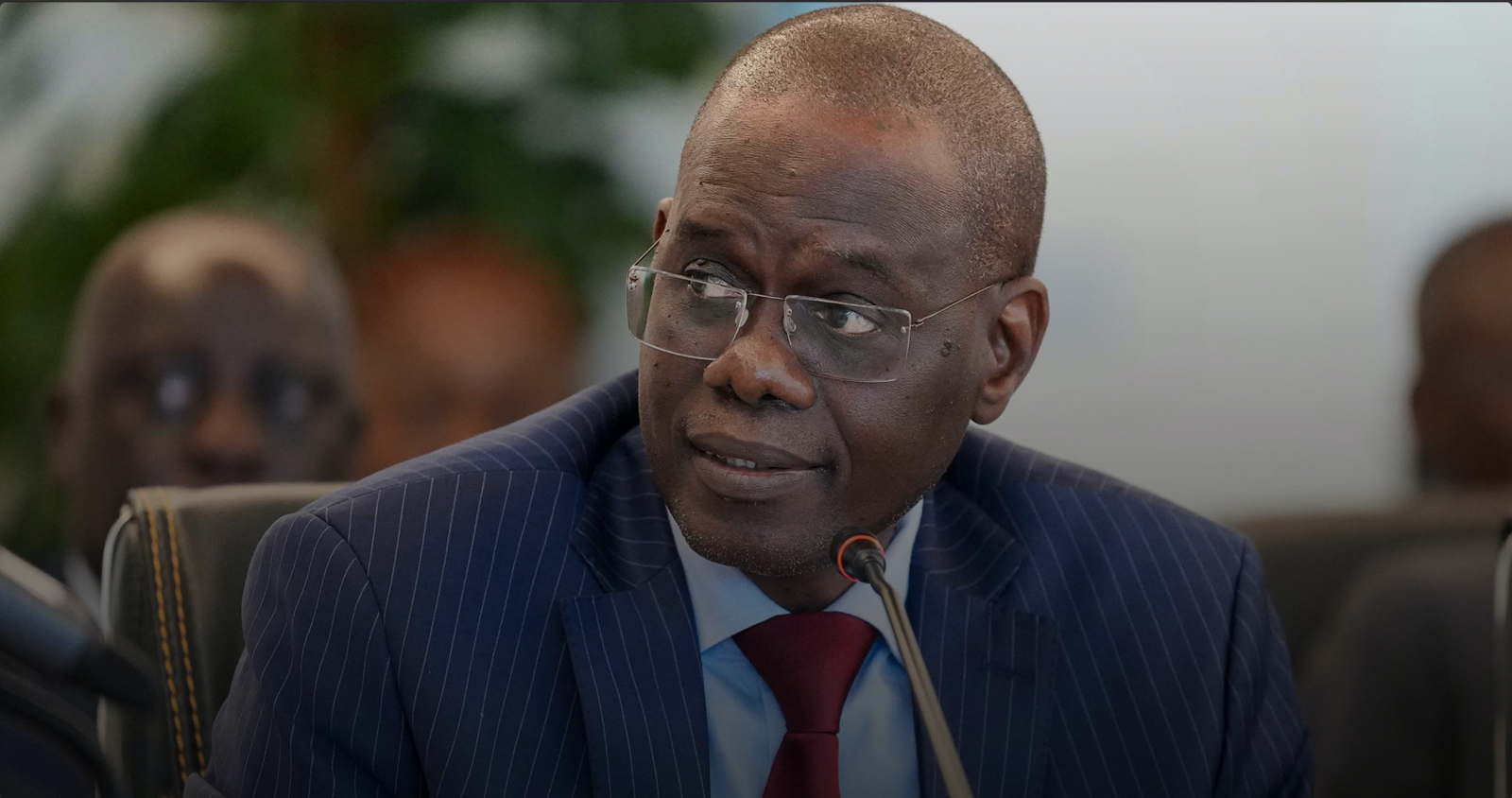
Ahmadou Alhaminou Mohamed LO, aged sixty and of Senegalese nationality, has been appointed Prime Minister. An economist by training, and a specialist in macroeconomics, banking regulation, financial markets, and Islamic finance, he has been a member of the Government since April 2024 and is among the key architects of the rollout of the new governance framework.
He is a graduate of the Prytanée Militaire of Saint-Louis, where he earned his scientific baccalaureate with honors in 1985 as the top student in his class. He went on to study at Cheikh Anta Diop University, obtaining a Master’s degree in Economics, following a Diploma in Banking Techniques from the West African Training and Banking Studies Center in Dakar. In 2023, he further enhanced his academic background with an Executive Master in Islamic Finance from INCEIF University in Kuala Lumpur.
The bulk of his career was spent at the Central Bank of West African States (BCEAO), which he joined in 1987 and where he steadily rose through the ranks. Starting as Head of Treasury Services, then Head of Market Operations, he went on to serve as Director of Market Operations, Director of Banking Activities and Economic Financing, and Director General of Organization and Information Systems. Appointed National Director for Senegal in December 2016, he combined this role from May 2021 with that of Advisor to the Governor, before being promoted in February 2024 to Secretary General of the Institution at its headquarters in Dakar.
Over the past decade at the BCEAO, he supported the State of Senegal in issuing eurobonds on international financial markets, in its engagements with rating agencies Standard & Poor’s and Moody’s, and in negotiations with the International Monetary Fund under the ISPE and ICPE programs. He also led efforts to structure relationships between local banks and foreign investors in the development of oil and gas projects.
In addition, he coordinated the BCEAO–Islamic Development Bank working group on the promotion of Islamic finance in the WAEMU region, contributed to the roadmap for the ECOWAS single currency, and took part in the restructuring of Senegal’s banking system in the 1990s. He also represents the Chairman of the Board of Directors of the WAEMU Deposit Guarantee and Resolution Fund and serves on the Board of the Pension Fund for Executive Staff of the Union. He speaks and writes French and English and reads Arabic.
He was appointed to Government on April 5, 2024, at the formation of the new administration following the political transition, serving as Minister and Secretary-General of the Government. For over a year, he acted as the administrative backbone of the Council of Ministers, coordinating interministerial action, ensuring policy coherence, and overseeing the implementation of presidential decisions. In this capacity, he played a central role in the operational launch of the new governance framework during a pivotal phase of strategic reforms.
On April 30, 2025, he was elevated to the rank of Minister of State, Minister at the Presidency, in charge of monitoring, steering, and evaluating the National Transformation Agenda “Senegal 2050.” As its operational lead, he oversaw its implementation pace, technical arbitrations, and the measurement of its outcomes across the entire public sector.
By appointing him Prime Minister, the President of the Republic entrusts executive leadership to a senior statesman with deep expertise in monetary and financial matters, who has been at the heart of government since the outset of the new era and has already been responsible, within the Presidency, for the operational management of the National Transformation Agenda.
Key Statements from His First Address
On the meaning he attaches to his new role, the Prime Minister stated:
“I consider this new responsibility as a calling,” tracing its roots to his family upbringing, the motto of the Prytanée Militaire of Saint-Louis Knowledge to Better Serve — and his long career at the Central Bank of West African States.
On the state of the country, he offered a clear diagnosis:
“We must all be aware of the urgent context in which our country finds itself.”
He cited public finance pressures, the impact of the Middle East crisis on energy and food prices, recurring social tensions, and a deteriorating regional security environment.
On the significance of the moment, he declared:
“Senegal is at a turning point. This calls for national mobilization.”
He urged all segments of society Senegalese at home and abroad, youth, women, rural and urban populations, civil society, and religious and traditional authorities to rally behind the National Transformation Agenda “Senegal 2050.”
On the political direction of the new phase, he clarified:
“This is not a change of course” in Senegal’s systemic transformation commitments, but rather “a change in method in institutional coherence and government action, as desired by the Head of State,” in line with the PROJET commitments and grounded in PASTEF.
Addressing the local private sector, technical and financial partners, and foreign investors, he delivered a reassuring message:
“Senegal is a safe and reliable country, and intends to remain so.”
Finally, addressing the Senegalese people, he affirmed:
“Only the interests of the country have always guided the decisions of the President of the Republic in the conduct of State affairs.”