


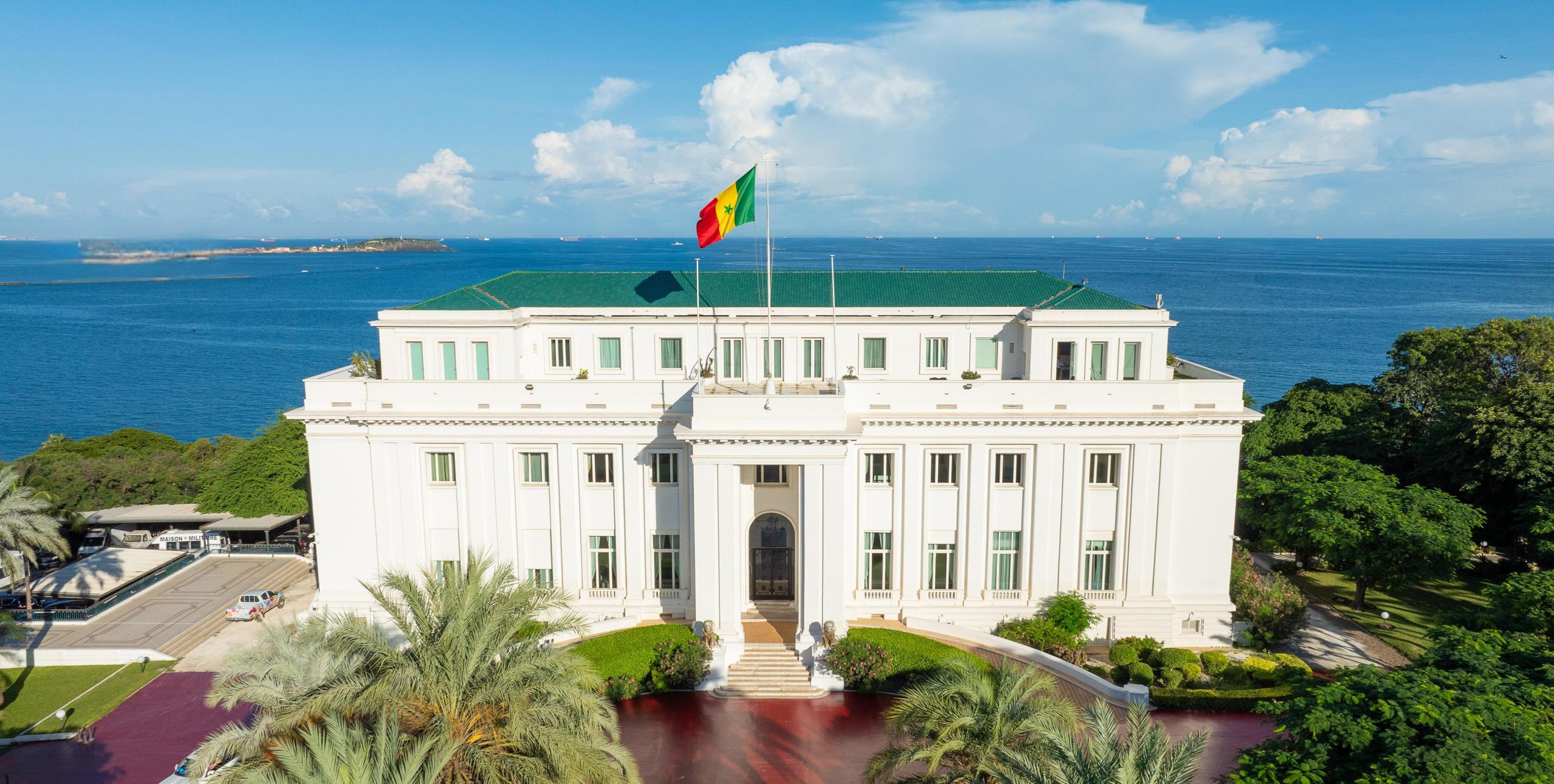
The Council of Ministers met on Wednesday, February 25, 2026, under the chairmanship of His Excellency Mr. Bassirou Diomaye Diakhar Faye, President of the Republic.
UNDER THE PRESIDENT OF THE REPUBLIC’S COMMUNICATION
The Head of State delivered a statement addressing the following points:
Development of a National Civil Protection Culture
The President of the Republic first noted a resurgence and multiplication of incidents involving fires, bushfires, road accidents, building collapses, and drownings. He also highlighted the worsening of natural disasters, river flooding, risks of inundation, and accelerated coastal erosion threatening many localities across the country. He further expressed national compassion and solidarity with the populations of the village of Touba Thiarène, which was the scene of a violent fire. According to the Head of State, this situation calls for a fundamental transformation of prevention and civil protection mechanisms.
In this regard, and in anticipation of the celebration of International Civil Protection Day on March 1, the Head of State requested the Prime Minister and the Minister of the Interior and Public Security to take the necessary steps to validate the National Civil Protection and Disaster Risk Management Strategy. He also stressed the urgency of ensuring the optimal implementation of the infrastructure and equipment development plan for the National Fire Brigade.
The President emphasized the importance of strengthening human resources within the National Fire Brigade, promoting the development of a national civil protection culture, and establishing a volunteer framework for firefighters and civil protection more broadly.
Furthermore, the Head of State insisted on the urgent restructuring of the national civil protection governance framework, including the Higher Commission, regional commissions, and auxiliary civil protection commissions, as well as updating national prevention and disaster risk management plans, particularly the ORSEC Emergency Response Plan.
He instructed the Minister of the Interior and Public Security and the Minister of Urban Planning, Local Authorities and Territorial Development to reflect, together with public and professional stakeholders, on the establishment of a National Center for Disaster Risk Prevention and Management.
Finally, the President requested the Prime Minister and the Minister of the Interior and Public Security to initiate the process of creating a robust national structure for the strategic governance of civil protection, with strengthened human resources and adequate resources.
Sustainable Improvement of Urban and Interurban Mobility
The President of the Republic reminded the Government that the safe mobility of people and goods is a priority of the national development project for a sovereign, just, and prosperous Senegal and remains a driver of economic and social development. He emphasized the need to regulate vehicle traffic and improve road safety.
In this regard, he called on the Government to implement appropriate measures to improve interurban and urban mobility, particularly targeting the Dakar metropolitan area, certain cities, and road corridors identified as high-risk for accidents.
The President underscored the importance of diversifying modes of transportation for people and goods between regions, ensuring the development of the railway network and improving the quality of public transport systems. He therefore requested the Minister of Land and Air Transport to consult all stakeholders to redefine priorities and options for public transport structures, in a logic of complementarity, strengthened national connectivity, and optimization of operating costs and fares.
Regarding private transport operators and their associations, the Head of State called for an inclusive reflection on the modalities for modernizing vehicle fleets and transport systems, ensuring that revised and adapted regulations facilitate the mobility of people and goods.
Finally, the President requested the Minister of Land and Air Transport to strengthen social dialogue with sector stakeholders and to propose, before the end of May 2026, a new coordinated framework to improve urban and interurban mobility.
Knowledge, Preservation and Promotion of the National Historical Heritage
The President observed that Senegal possesses exceptional tangible and intangible national heritage, whose promotion contributes to economic development and international cultural influence. He therefore requested the consensual updating, before the end of 2026, of the inventory and classification of tangible and intangible assets forming part of the historical heritage, as well as the organization of an International Forum on Senegal’s Historical Heritage in December 2026.
In addition, the Head of State emphasized the urgency of developing a strategy to expand and preserve sites, historical monuments, and nationally classified assets, particularly those listed as UNESCO World Heritage sites, and to initiate, with the involvement of renowned experts, the necessary research for the effective return of national cultural property to Senegal’s historical heritage.
UNDER THE PRIME MINISTER’S COMMUNICATION
The Prime Minister presented his communication on the following points:
Social Housing
The Prime Minister emphasized that, within the framework of the implementation of the National Transformation Agenda, Senegal 2050, the social housing sector represents a high-impact component for the national economy, whose development will enable the establishment of a sustainable housing program, particularly social housing.
According to the Prime Minister, the strategic choice of the social housing ecosystem aims to strengthen economic competitiveness and guarantee every citizen access to decent and economically affordable housing in the hub or region of their choice, within the framework of balanced territorial planning.
He outlined the diagnosis of the housing deficit, including the structural imbalance between supply and demand, rapid urbanization, and inequalities in access to housing and urban services. He called for the definition of a genuine National Housing Strategy focused on land security, appropriate legislation, sustainable financing, and social and territorial equity in access to housing. This strategy, aligned with the new housing policy, must be operationalized through the implementation of a new housing program based on diversified supply and an economic model relying on accessible financing and marketing mechanisms.
The Prime Minister noted that formal housing production is currently concentrated between the regions of Thiès and Dakar, and that the sector faces major structural constraints, including limited access to land for private developers, cooperatives, and public operators; difficulties in mobilizing adequate and sustainable financing; insufficient support for cooperatives and private developers; limited inclusion of informal sector actors and certain civil servants; and weak support to housing cooperatives.
He stressed the need to identify and remove bottlenecks such as land access, administrative delays, and the dominant financial model based on bank mortgage lending. He announced ongoing structural reforms, including the “Cities of Transformation” project. He also instructed the Minister of Urban Planning, Local Authorities and Territorial Development to develop the Greater Dakar Urban Planning and Development Scheme (SAUDAK) and to accelerate the preparation of the Integrated Development Plan for the area covering the New City of Thiès, the Thiès ZAC, and the Daga Kholpa Urban Hub.
The Prime Minister further called for strengthening the operational capacity of SAFRU, accelerating the implementation of the social housing program primarily through self-construction, revitalizing housing cooperatives, and significantly reinforcing the institutional capacity of the Social Housing Assistance Project Office (BAHSO). Finally, he instructed the Secretary of State for Housing, in coordination with the relevant ministerial departments, to take all necessary measures to develop public-private partnerships to operationalize the option he has set out across various Territorial Hubs, through the creation of modern and productive housing clusters and the effective implementation of the “Cities of Transformation.”
Diaspora Real Estate Fund
The Prime Minister recalled the instructions given by the President of the Republic during the first edition of the National Diaspora Day. The reflection initiated thereafter, at the initiative of the Minister of Economy, Planning and Cooperation, led to the proposal to create a Senegal-Diaspora Real Estate Fund.
He noted that remittances from the Senegalese Diaspora represent nearly 10% of GDP, amounting to 2,200 billion CFA francs annually, mainly directed toward consumption.
The Prime Minister presented the concept of the Senegal-Diaspora Real Estate Mutual Fund (FCPI-DS), which would aim to transform these financial flows into rental real estate investments, generating regular income for families while building sustainable assets for the Diaspora, without public debt.
He requested the Minister of Economy, Planning and Cooperation to finalize the reflection with stakeholders and present it soon to the Council of Ministers.
UNDER MINISTERIAL COMMUNICATIONS
The Minister of Health and Public Hygiene presented a communication entitled: “Health in All Policies: An Imperative for the Success of the Health Prevention and Promotion Strategy.”
The Minister of Youth and Sports presented a communication on the monitoring of works undertaken in preparation for the 2026 Summer Youth Olympics.
UNDER LEGISLATIVE AND REGULATORY TEXTS
The Council examined and adopted:
The draft decree establishing and setting the rules for the organization and functioning of the Market Regulation Agency (ARM);
The draft decree instituting the market regulation levy.
Marie Rose Khady Fatou FAYE
Secretary of State to the Prime Minister,
In charge of Relations with Institutions,
Government Spokesperson.