


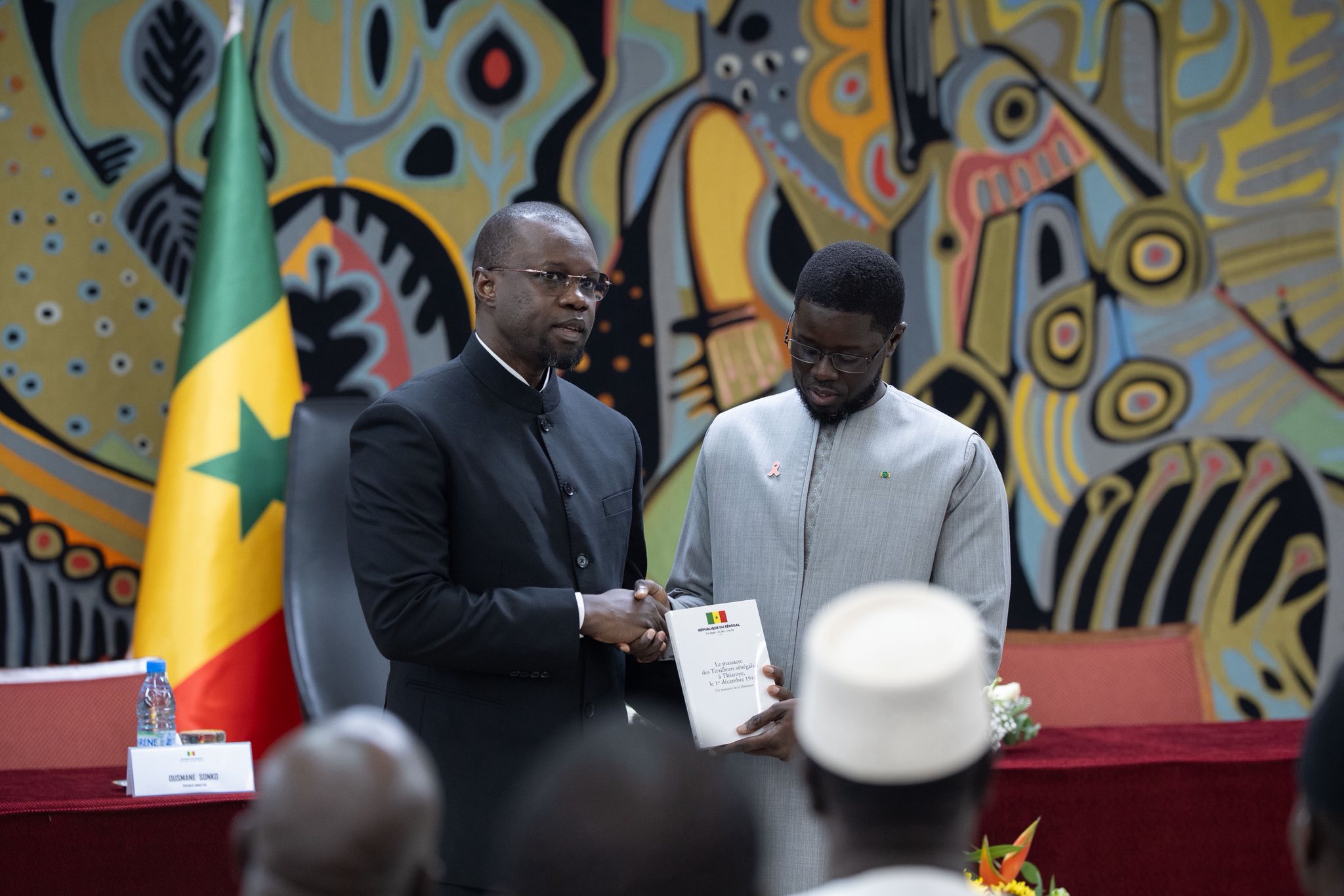
The President of the Republic, His Excellency Bassirou Diomaye Faye, officially received the White Paper on the Thiaroye Massacre, which occurred on December 1, 1944, this afternoon. This solemn ceremony marks a significant moment of national remembrance and reflection on a painful chapter in the history of Senegal and Africa. It also symbolizes the State’s commitment to questioning its past, shedding light on its memory, and affirming, through knowledge, the inalienable right to justice and human dignity. The result of a rigorous process driven by research, conviction, and duty, the White Paper represents a major collective work. It pays tribute to those who, through their scholarship, commitment, and faith in truth, have enabled the Nation to confront its history with courage and serenity. In the presence of Government members, the Commemoration Committee, and the diplomatic corps, the Head of State particularly commended Prime Minister Ousmane Sonko, whose dedication was instrumental in leading this project of memory and history in service of the Pan-African ideal. The Head of State emphasized that the White Paper “is far more than a mere document. It is a narrative constructed by us and for ourselves, grounded in tangible facts drawn from archives held here and in France,” he declared. “This narrative also stems from a refusal: the refusal to accept that our history be taught to us by sources other than our own. We owe this to African youth,” he added. Addressing the role of external partners, the President of the Republic noted, with a degree of bitterness, that the expected cooperation from the French Republic in fully providing access to archives has not always met expectations. However, he clarified, this reservation “has in no way diminished Senegal’s determination to shed full light on this tragedy” in a spirit of collaboration and historical truth with the former colonial power. Through this ceremony, the Head of State reaffirmed Senegal’s commitment to continuing the work of remembrance and placing the Thiaroye Massacre at the heart of the national narrative, in tribute to the African heroes who fell for freedom and dignity.
Watch the video of the President of the Republic's statement:
Below is the full text of the President of the Republic's Speech on the Official Presentation of the White Paper on the Thiaroye Massacre:
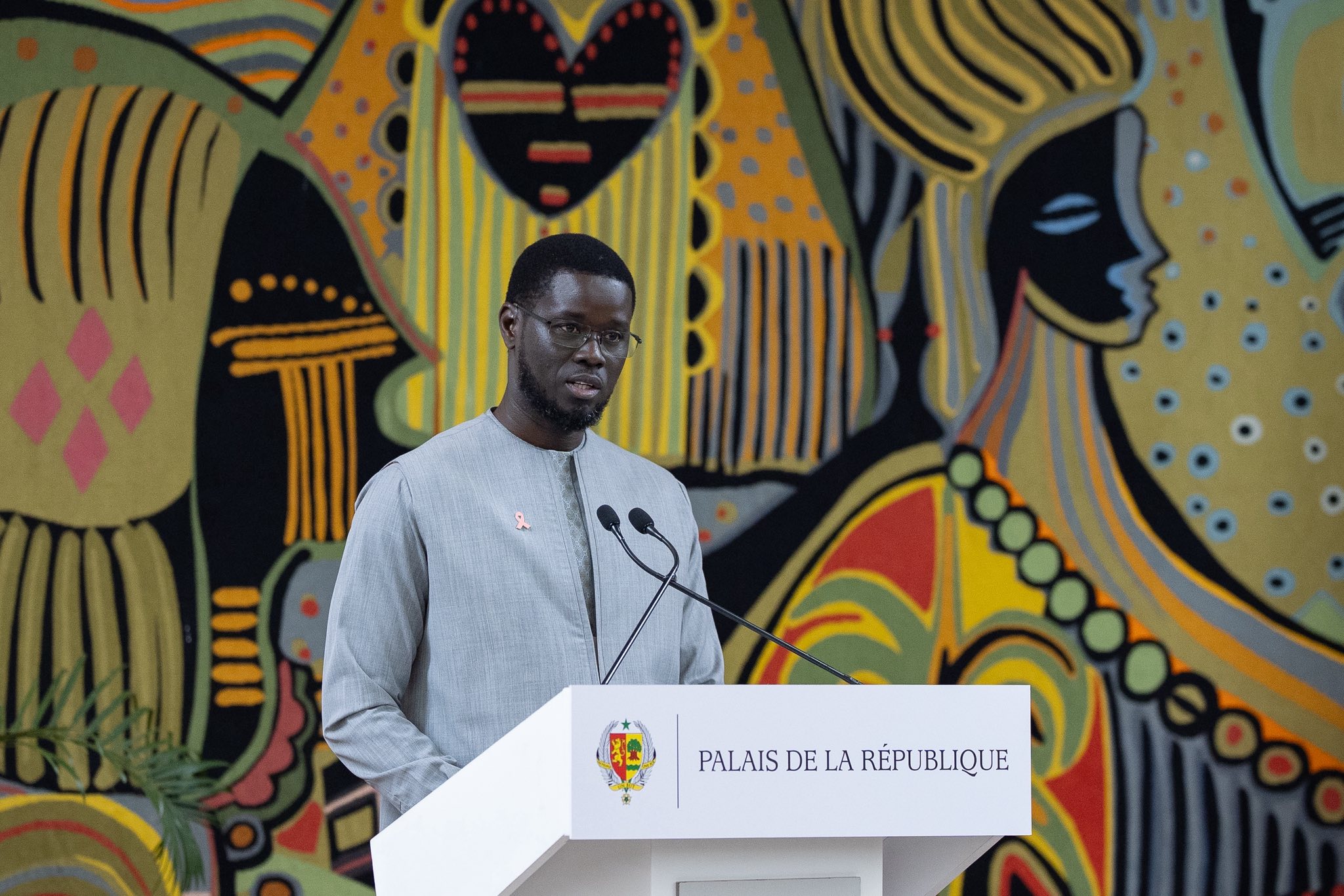
Palace of the Republic, October 16, 2025 - Only the spoken word is authoritative
Mr. Prime Minister, Ladies and Gentlemen, Members of the Government, Dear Members of the Commemoration Committee, Distinguished Guests, Dear Fellow Citizens,
The ceremony that brings us together today is not a celebration of a memory: it is an act of truth. The official presentation of the White Paper on the Thiaroye Massacre, which occurred on December 1, 1944, is a moment of history and conscience. It symbolizes the will of a State that questions its past, illuminates its memory, and claims, through knowledge, the inalienable right to justice and human dignity. In this solemn moment, we are not merely receiving a document: we are welcoming the result of a rigorous process, fueled by research, conviction, and duty. This collective work honors those who, through their scholarship and faith in truth, have enabled our nation to confront its history with courage and serenity.
Ladies and Gentlemen, I warmly commend all the authorities present, particularly Mr. Prime Minister Ousmane Sonko, whose commitment has been decisive in leading this project of memory and history in service of the Pan-African ideal. My gratitude also extends to Professor Mamadou Diouf, as well as to all members of the Commemoration Committee, its commissions, sub-commissions, and resource persons, present here or represented. Your intellectual rigor and exemplary dedication have been guiding lights in our quest for truth. You have enabled our nation to better explore its past while opening avenues for collaboration with countries that share this tragic history. I congratulate you for this remarkable work.
The year 2024 marked a decisive turning point in our collective memory. The commemoration of the 80th anniversary of the Thiaroye tragedy, carried by a popular momentum and an international resonance, was a moment of unity and shared pride. It testified to our unwavering commitment to honor the memory of those who gave their lives for freedom. The fraternal presence of our friendly nations strengthened our shared commitment to truth, justice, and reconciliation. I wish to reiterate my gratitude to all our African and international partners who share this memory and stand with us to draw lessons from it to build a future rooted in the solidarity of peoples.
Ladies and Gentlemen, Thanks to the diligent implementation of presidential directives, the White Paper we receive today represents a decisive step in the rehabilitation of historical truth. This document is far more than a mere report: it is a narrative constructed by us and for ourselves, grounded in tangible facts drawn from archives held here and in France. This narrative also stems from a refusal: the refusal to accept that our history be taught to us by sources other than our own. We owe this to African youth.
However, I must express, with some bitterness, that the expected cooperation from the French Republic in fully providing access to archives has not always met our expectations. But this reservation has in no way diminished our determination to shed full light on this tragedy in collaboration with the former colonial power.
I am particularly attentive to the recommendations outlined in this White Paper. I have thus approved the continuation of archaeological excavations at all sites likely to contain mass graves. Historical truth is not decreed: it is uncovered, excavation by excavation, until the last stone is lifted.
May the memory of African tirailleurs remain a beacon in the conscience of our continent. May it inspire present and future generations to build that African dawn of peace, justice, and fraternity, so beautifully sung by Keita Fodéba and Léopold Sédar Senghor. For memory has meaning only if it enriches the present and prepares the future.
Thank you for your kind attention.