


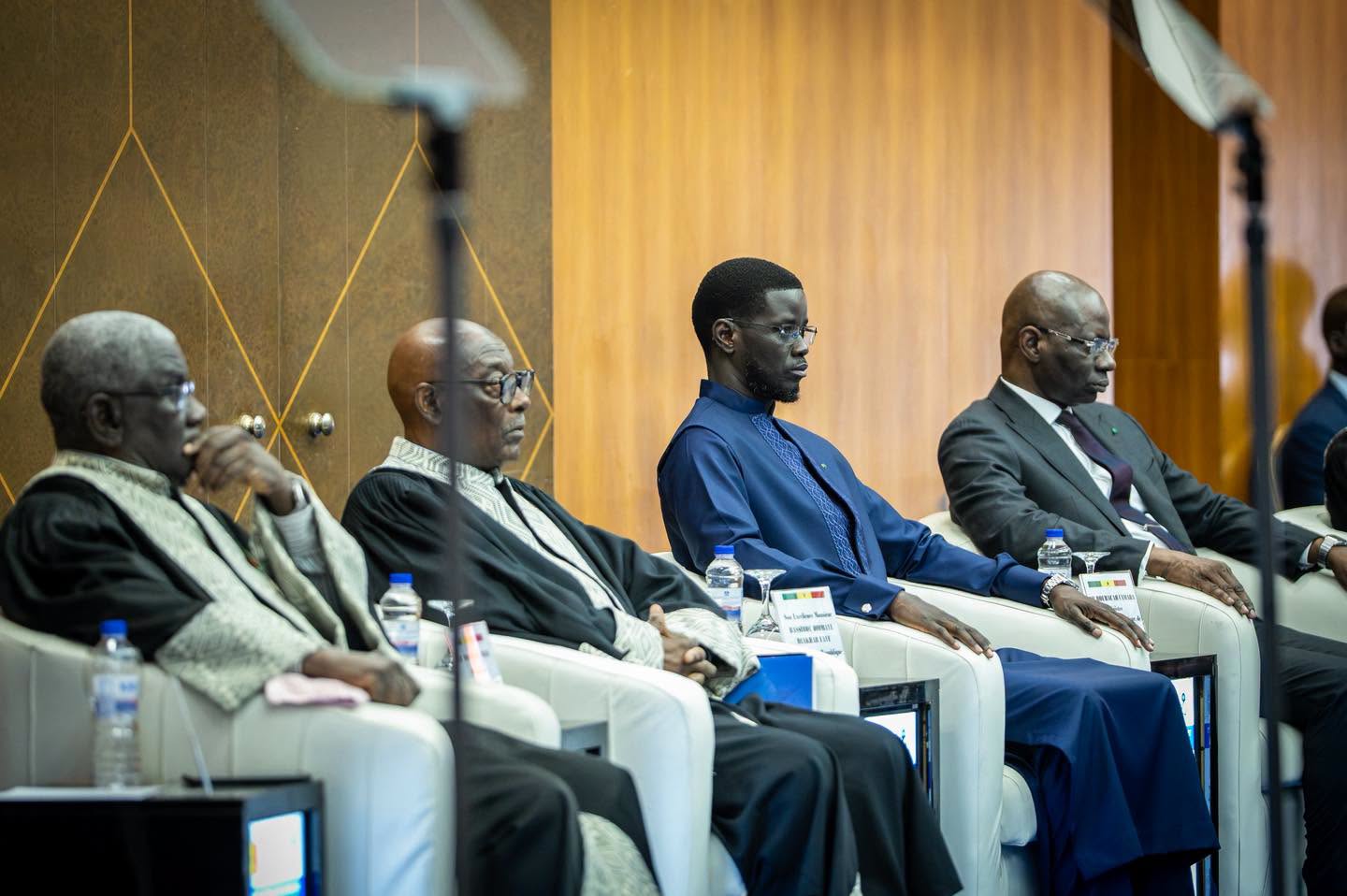
On July 21, the President of the Republic, His Excellency Mr. Bassirou Diomaye Diakhar Faye, presided over the solemn academic session of the National Academy of Sciences and Technology of Senegal, dedicated to sustainable food sovereignty in the name of dignity.
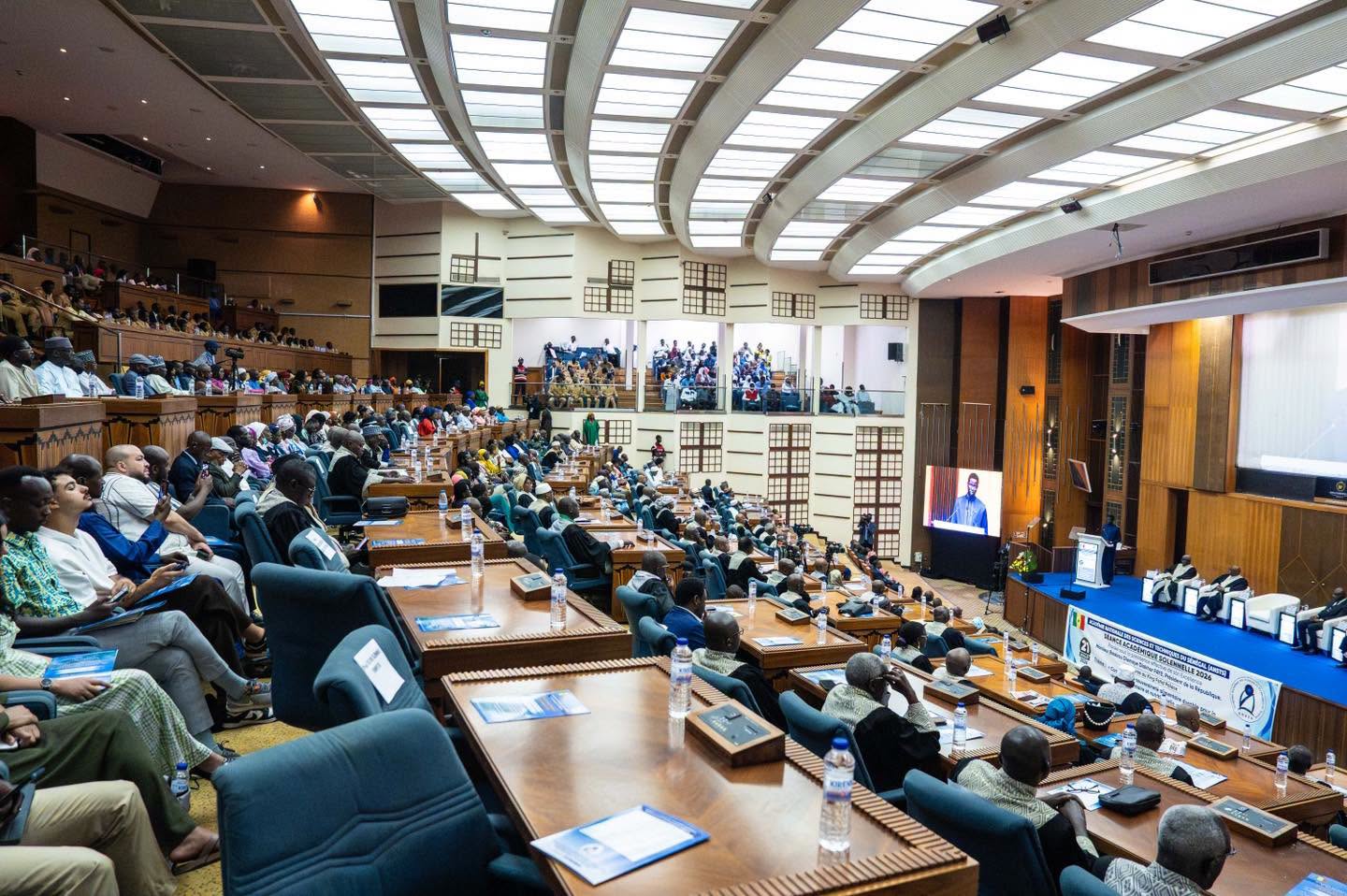
Before the national scientific community and the senior leaders of sister African academies, the Head of State placed this ambition at the heart of the Senegal 2050 National Transformation Agenda: to build a resilient food system capable of feeding our people with dignity and sustainably. Producing more of what we consume, and consuming more of what we produce.
Rejecting what he described as a “costly and risky” structural dependence on food imports, the President issued a solemn call for a National Pact for Food Sovereignty, grounded in science, technology and innovation, and driven by the shared responsibility of the State, researchers, women and young producers, as well as the private sector.
Hailing the Academy as the true scientific conscience of the Nation, the Head of State warned of the worrying decline of science in our education system and announced the establishment of a National Mathematics, Science and Technology Competition, from primary to secondary school, with the aim of rekindling in our children a passion for knowledge.
One conviction underpins this vision: to transform today’s vulnerabilities into tomorrow’s opportunities, for a Senegal that can feed itself, in sovereignty, prosperity and dignity.
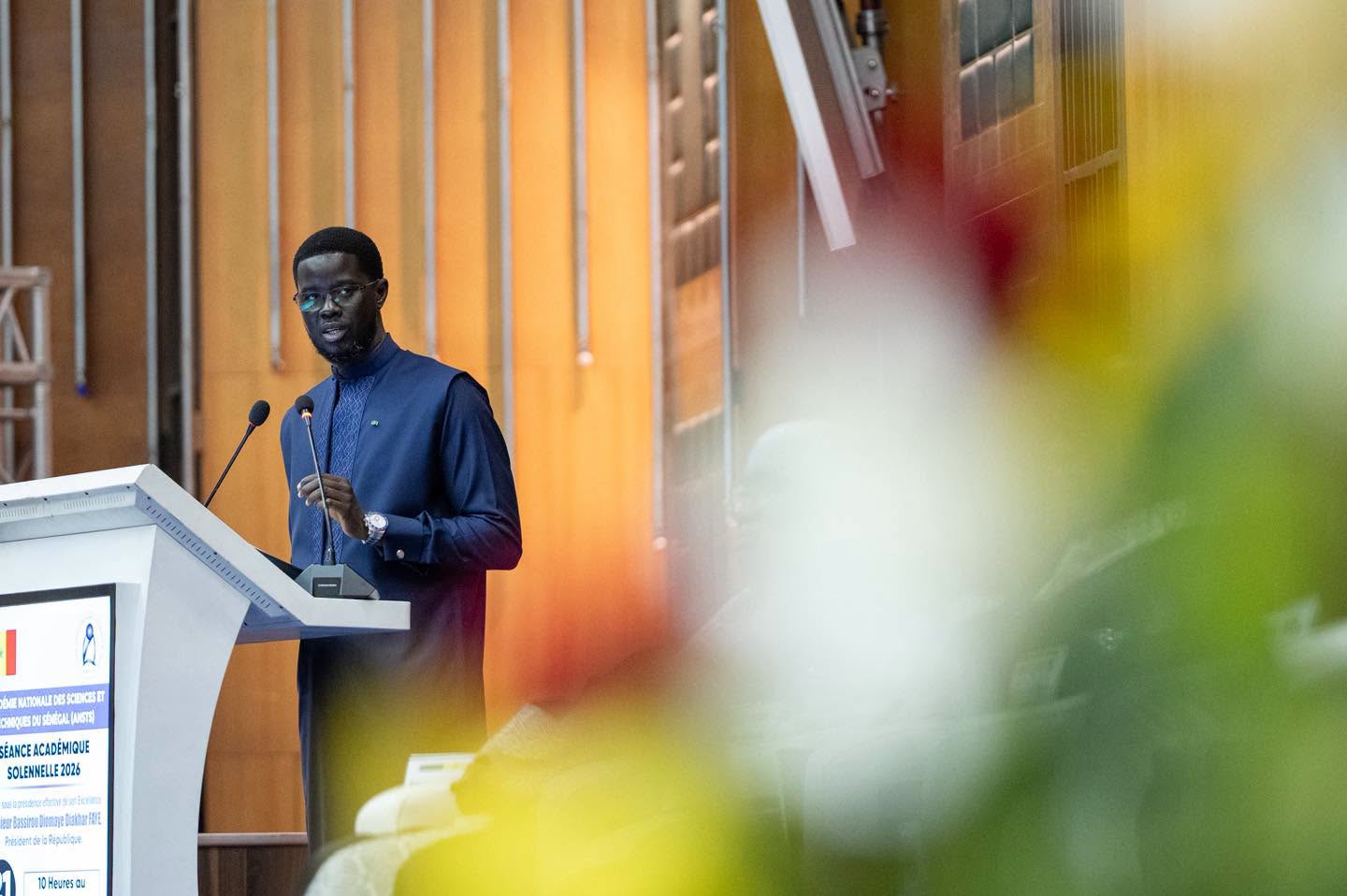
Find below the full text of the address by the Head of State:
Dakar, 21 July 2026 – Only the spoken word is authentic
Mr. Prime Minister;
Mr. Minister of Higher Education, Research and Innovation;
Ladies and Gentlemen Ministers;
Ladies and Gentlemen members of the Diplomatic Corps and Representatives of International Organizations;
Mr. President of the National Academy of Sciences and Techniques of Senegal;
Ladies and Gentlemen High Officials of the Academies of sister African countries;
Ladies and Gentlemen Academicians;
Dear members of the scientific community;
Honorable guests;
Ladies and Gentlemen,
It is with profound respect for science and great consideration for the eminent members of the National Academy of Sciences and Techniques of Senegal that I stand among you today. This solemn academic session is a privileged moment of communion between the Head of State and the national scientific community, gathered to exchange views on a theme that is decisive for the present and the future of our country.
This year, our meeting is devoted to a vital issue for the Nation, namely Senegal’s food sovereignty. This theme occupies a determining place in the National Agenda for Transformation Senegal 2050, for which we have chosen a model of endogenous, productive and inclusive development. Fundamentally, it is a matter of building a food system that is resilient to climatic and economic shocks, capable of feeding its population with dignity and sustainability.
The ambition can be summed up in a simple formula: to enable our fellow citizens to produce more of what they consume, and to consume more of what they produce. By 2050, through systemic transformation, we want to make Senegal a country where food sovereignty is a reality.
This sovereignty will be neither a slogan nor a mere sectoral policy. It consists, concretely, in profoundly transforming the logic of agricultural production, notably through:
• the mutation of agri-food systems towards greater efficiency and resilience, by giving a major place to the diversification of production – whether of plant, animal or fishery origin;
• the rationalization of local value chains, through adequate packaging, judicious processing and a drastic reduction of losses, both upstream and downstream of primary production, in connection with the modernization of agricultural equipment and infrastructure;
• the perfect mastery of inputs – fertilizers, seeds, irrigation systems, technologies – by exploring all the opportunities offered by precision agriculture and artificial intelligence.
Ladies and Gentlemen,
Food sovereignty is not limited to the availability of foodstuffs. Chronic malnutrition still affects thousands of children, while micronutrient deficiencies persist and overweight is on the rise. This is enough to show that the nutritional transition is a major challenge to be met.
Consequently, our national strategy for food sovereignty cannot be limited to the availability of foodstuffs. It must rather strive to guarantee every Senegalese woman and every Senegalese man lasting access to healthy, diversified, nutritious and culturally acceptable food.
Naturally, the ambition to push back all forms of undernutrition and malnutrition requires collective mobilization. In this regard, we pay particular attention to women and young people, who represent the main force for the transformation of our agricultural system and thus constitute an essential lever of our food sovereignty.
Ladies and Gentlemen,
Sovereignty, whether food-related or of any other nature, is not decreed; it is built, methodically, on three essential pillars:
• The mobilization of the achievements of science, technology and innovation, in the face of the intensification of droughts, floods, land salinization and the disruption of agricultural seasons.
• The structural and productive transformation of our economy, particularly in the sectors of production, processing, transport and distribution of agri-food products.
• The involvement of all – researchers, scientists and technicians, producers and private operators – at the national level as well as in our localities.
In this respect, we must be clearly aware that the National Agenda for Transformation Senegal 2050, which underpins the National Strategy for Food Sovereignty, must closely rest on the valorization and optimization of the significant advances of Science, Technology and Innovation.
In this regard, I wish to salute the eminent role of the National Academy of Sciences and Techniques of Senegal, the true scientific conscience of our country. Over the course of its work and the decades, it has known how to maintain an independent, constructive, rigorous and responsible scientific voice, in the service of the integral and sustainable development of Senegal.
I invite our scientific diaspora to contribute more to this national effort, through its expertise and its international networks. In this regard, I encourage the Academy to pursue its “Showcase of the Scientific Diaspora” programme, which will strengthen synergy and partnership between our higher education and research institutions.
We call for the strengthening of scientific and technological partnerships with African and international Academies, in order to pool knowledge and accelerate innovations adapted to our realities. In this connection, we salute the fine initiative of the National Academy of Sciences and Techniques of Senegal in inviting to this ceremony several high officials of sister Academies from Africa, to whom I extend a warm welcome on Senegalese soil.
Dear Academicians,
The quality of your analyses holds my full attention: on the historical fragmentation of our agricultural policies and the fragilities of our food systems, on the scale of post-harvest losses and the weakness of local processing, as well as on the need for integrated governance based on the synergy of all stakeholders. I would add your reflections on the restoration of our degraded soils, the valorization of our endogenous knowledge and the better territorial anchoring of our public policies.
These findings, whose relevance is matched only by their lucidity, fully join our concerns and guide our common action.
Like many African countries, Senegal remains confronted with a structural, costly and risky food dependence. This is the paradox so well documented in the brilliant address by Professor Guiro that we have just heard: that of a country with considerable agro-sylvo-pastoral and fishery potential, and yet heavily dependent on imports.
This situation, I agree with you, is no longer sustainable, for it constitutes a strategic vulnerability, but also a historical challenge that we must meet, all together, with ambition and method.
That is why I call for a National Pact for Food Sovereignty, founded on science, technology and innovation, on collective responsibility and on the concerted action of the State with researchers, women and young producers, as well as the private sector.
In this ambition, the Academy must remain an essential pillar. For my part, I remain in favour of a strong convergence between the State and the Academy, in order to better base our public policies on science – both for their formulation and for their evaluation.
Together, we have the responsibility to transform today’s vulnerabilities into tomorrow’s opportunities and to promote a nourishing Senegal, in sovereignty, prosperity and dignity.
Ladies and Gentlemen,
I would also like to take advantage of the framework offered by this meeting to praise the patriotism and scientific excellence that characterize the Academicians. I encourage them to continue to enlighten, guide, anticipate and accompany the action of the State, in the formulation, implementation and evaluation of public policies.
Mr. President of the National Academy of Sciences and Techniques of Senegal,
Ladies and Gentlemen Academicians,
For my first public meeting with you, I particularly wish to put my finger on a critical problem of our education system, namely the constant and dangerous deterioration of the place of science and technology, in the era of the digital and artificial intelligence. Thus, an excellence stream such as the S1 series, mathematics and physics, is virtually on the path to disappearance.
From this platform, I call for an awakening of awareness led by the scientific and technical community so that we may rise to the challenge of science and technology. I entrust the Academy of Sciences and Techniques of Senegal with carrying this noble struggle. I am convinced that we will succeed in reversing the trend and that we will succeed.
For my part, I have already instructed the Minister of National Education to organize, in an inclusive manner, each year the National Competition in Mathematics, Sciences and Technology from primary to secondary level. We must restore the taste for mathematics, sciences and technologies in our children. By doing so, we ensure with certainty that questions of sovereignty will be solvable.
I could not conclude without once again congratulating the National Academy of Sciences and Techniques of Senegal for its constant commitment in the service of the Nation. I fully share its conviction that food sovereignty is at once a national cause, an imperative of stability and a requirement of dignity.
I thank you for your attention.