


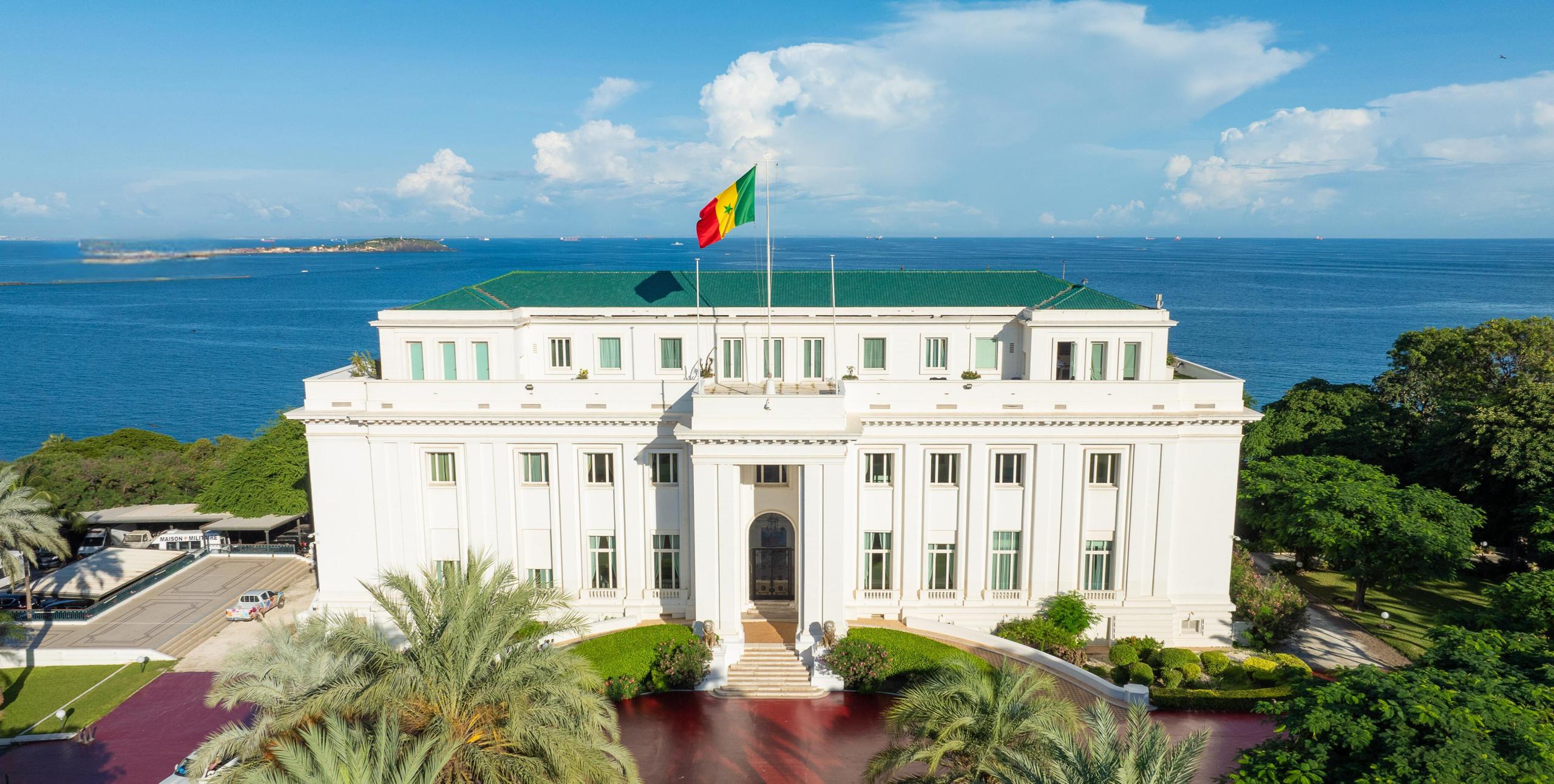
The Council of Ministers met on Wednesday, February 18, 2026, under the chairmanship of His Excellency Mr. Bassirou Diomaye Diakhar Faye, President of the Republic.
UNDER THE COMMUNICATION OF THE PRESIDENT OF THE REPUBLIC
The Head of State delivered a communication on the following points:
The Advent of Ramadan and Lent
The President of the Republic first extended his congratulations and best wishes to the Muslim Ummah and the Christian Community on the occasion of the beginning of the holy month of Ramadan and Lent. He prayed, together with the entire Nation, for a Senegal of peace, prosperity, and solidarity. In this regard, he commended interfaith dialogue in Senegal, strengthened by the State’s continued support for religious affairs, notably through the General Delegation for Religious Affairs (DEGAR).
Recalling to the Government the need to support communities during this exceptional period of religious devotion, the Head of State requested an increase in resources allocated to religious affairs.
Assessment and Strengthening of the State’s Territorial Action
The President of the Republic informed the Council that he held, on February 12, 2026, a seminar with regional governors, in the presence of the Prime Minister and several members of the Government. He congratulated the Minister of the Interior and Public Security and the regional governors for the quality of their representation, the work accomplished in the field, and the reports, recommendations, and projects presented during the meeting.
The Head of State emphasized subsidiarity and local governance, with the effective involvement of administrative authorities, decentralized State services, and local authorities in the design, implementation, and monitoring and evaluation of public policies, taking into account the concerns and aspirations of the populations.
In this regard, he asked the Prime Minister to ensure that the regional priorities presented by each governor, aligned with the National Transformation Agenda, are duly addressed. Furthermore, he requested the Government to support territorial State structures in their modernization efforts by defining a new decentralization doctrine.
The Head of State urged the Government to give priority importance to:
(i) land management and urban development;
(ii) improving access to drinking water and ensuring consensual governance of the rural water subsector;
(iii) accelerating rural electrification programs and road and digital connectivity;
(iv) strengthening security and basic social infrastructure in border areas;
(v) developing Agriculture, Livestock, Fisheries, and ensuring sustainable forest resource management.
As part of the refoundation of the State’s territorial presence, the President of the Republic instructed the Prime Minister and the Minister of the Interior and Public Security to ensure the implementation of the Territorial Administration Modernization Plan, a fundamental component of the systemic transformation of Public Administration.
He also instructed the Prime Minister to supervise, starting in 2026, the implementation of a special program for the construction of buildings and public facilities for Territorial Administration, in order to consolidate the proximity and effectiveness of the State and public services across the country.
After urging the Minister of the Interior and Public Security to ensure the regular holding of regional conferences to assess the implementation of the National Transformation Agenda, the Head of State requested the Prime Minister to convene, every six months, an interministerial meeting to monitor State action in the regions.
New Momentum for National Youth Policy
In light of the celebration of National Day on April 4, an occasion to pay tribute to the Armed Forces and the youth, the President of the Republic emphasized the crucial role of youth in Senegal’s influence and in the implementation of the National Transformation Agenda, Senegal 2050.
Accordingly, he requested the Government to strengthen actions in favor of young people, improve the economic and social environment for youth, finalize the new Youth Policy, ensure the establishment—before the end of the first half of 2026—of the new Consultative Council of Youth of Senegal, and take appropriate measures for the organization of National Youth Week.
Strengthening the Role of Women in the National Transformation Agenda
In anticipation of the celebration of International Women’s Rights Day on March 8, the Head of State reminded the Government of the need to reinforce support for and promotion of women’s contributions within the National Transformation Agenda.
He requested the finalization of the draft law on women’s economic empowerment, the new National Strategy for Equity and Gender Equality, and the reform consolidating the National Parity Observatory.
Finally, the President of the Republic asked the Prime Minister, the Minister of Family, Social Action and Solidarity, and the Minister of Microfinance and Social and Solidarity Economy to strengthen cooperation, training, supervision, and financing mechanisms for women.
Agenda of the President of the Republic
The Head of State informed the Council that, on February 17, 2026, in Diamniadio, he presided over the groundbreaking ceremony for the House of Lawyers.
UNDER THE COMMUNICATION OF THE PRIME MINISTER
The Prime Minister began his communication with the Hides and Skins sector. He emphasized that, within the framework of the Special Investment and Financing Plan (2026–2028), the Hides and Skins value chain constitutes one of the high-impact components for the national economy and a key lever for accelerating the National Transformation Agenda.
Senegal has significant potential in hides production, mainly from cattle, sheep, and goats. However, processing capacity remains limited. More than 70% of Senegalese hides are exported raw, resulting in substantial loss of added value and the existence of an informal parallel export circuit without local processing. Despite a large livestock population and recognized artisanal know-how, the local processing rate remains below 5%.
The Prime Minister highlighted that strategic development of this sector represents a major opportunity to strengthen national industry, improve the trade balance, stimulate local economies, and foster high value-added industries such as leather goods, automotive interior fittings, and furniture manufacturing.
By 2034, the sector could generate more than 130,000 formal jobs and revenues exceeding 1,549 billion CFA francs, making it a major lever for economic inclusion, particularly for youth and women.
The objective is to build, by 2050, an integrated territorial ecosystem around Hides and Skins, covering the entire value chain—from modernized production and packaging to industrial processing into finished products and local and international marketing.
The Prime Minister called on the relevant ministers to take all necessary measures to develop public-private partnerships, particularly within Special Economic Zones to be established in the concerned Territorial Poles, and to implement an integrated artisanal and industrial development project for the Hides and Skins sector.
He also addressed the new Agricultural Policy, to be finalized by May 2026, and raised the issue of prison overcrowding, requesting a detailed report from the Minister of Justice.
Finally, the Prime Minister reported on his participation in the Conference of Heads of State and Government of the African Union, held in Addis Ababa on February 14 and 15, 2026. He also informed the Council that he would attend, with the entire Government, the quarterly question session at the National Assembly on February 24.
UNDER THE COMMUNICATIONS OF MINISTERS
The Minister of Land and Air Transport delivered a communication on road safety.
The Minister of Employment and Vocational and Technical Training spoke on the theme: “For a National Mobilization in Favor of Employment and Vocational and Technical Training.”
The Minister of Industry and Trade addressed the market situation and groundnut commercialization.
The Secretary of State for the Development of Small and Medium Enterprises and Industries presented the National Strategy for the Promotion and Development of SMEs/SMIs.
UNDER LEGISLATIVE AND REGULATORY TEXTS
The Council examined and adopted:
the draft law amending Law No. 65-60 of July 21, 1965 establishing the Penal Code;
the draft decree establishing and setting out the rules of organization and operation of the Commission for the Control of Public Procurement and PPP Projects classified as secret-defense.
UNDER INDIVIDUAL MEASURES
The President of the Republic took the following decisions:
At the Presidency of the Republic
Mr. Tabasky DIOUF, Colonel (Ret.), appointed Chairman of the Supervisory Board of the High Authority of Senegal Airports (HAAS), replacing Mr. Babacar Diagne.
At the Ministry of African Integration, Foreign Affairs and Senegalese Abroad
Mr. Salomon DIEDHIOU appointed Director of the National Mine Action Center of Senegal (CNAMS), replacing Mr. Papa Maguèye DIOP.
At the Ministry of Finance and Budget
Mr. Assane NDIR appointed Administrator of the Special Support Fund for the Energy Sector, replacing Mr. Théophile Edouard AMINE.
Mr. Mamané DJITTE appointed Chairman of the Board of Directors of the Special Support Fund for the Energy Sector, replacing Mr. Meïssa DIAKHATE.
At the Ministry of National Education
Mr. Pape Abdou DIA appointed Director of School Infrastructure Maintenance.
At the Ministry of Land and Air Transport
Mr. Abdoul Aziz MBODJI appointed Chairman of the Board of Directors of AIBD SA, replacing Mr. Pape Abdourahmane DABO.
At the Ministry of Urban Planning, Local Authorities and Territorial Development
Mr. Pape Abdourahmane DABO appointed Director General of the National Low-Cost Housing Company (SN HLM), replacing Mr. Bassirou KEBE.
Mr. El Hadji Mamadou GUEYE appointed Director of Architecture, replacing Mrs. Catherine Marie Thérèse FAYE, who has retired.
Marie Rose Khady Fatou FAYE
Secretary of State to the Prime Minister,
In charge of Relations with Institutions,
Government Spokesperson.