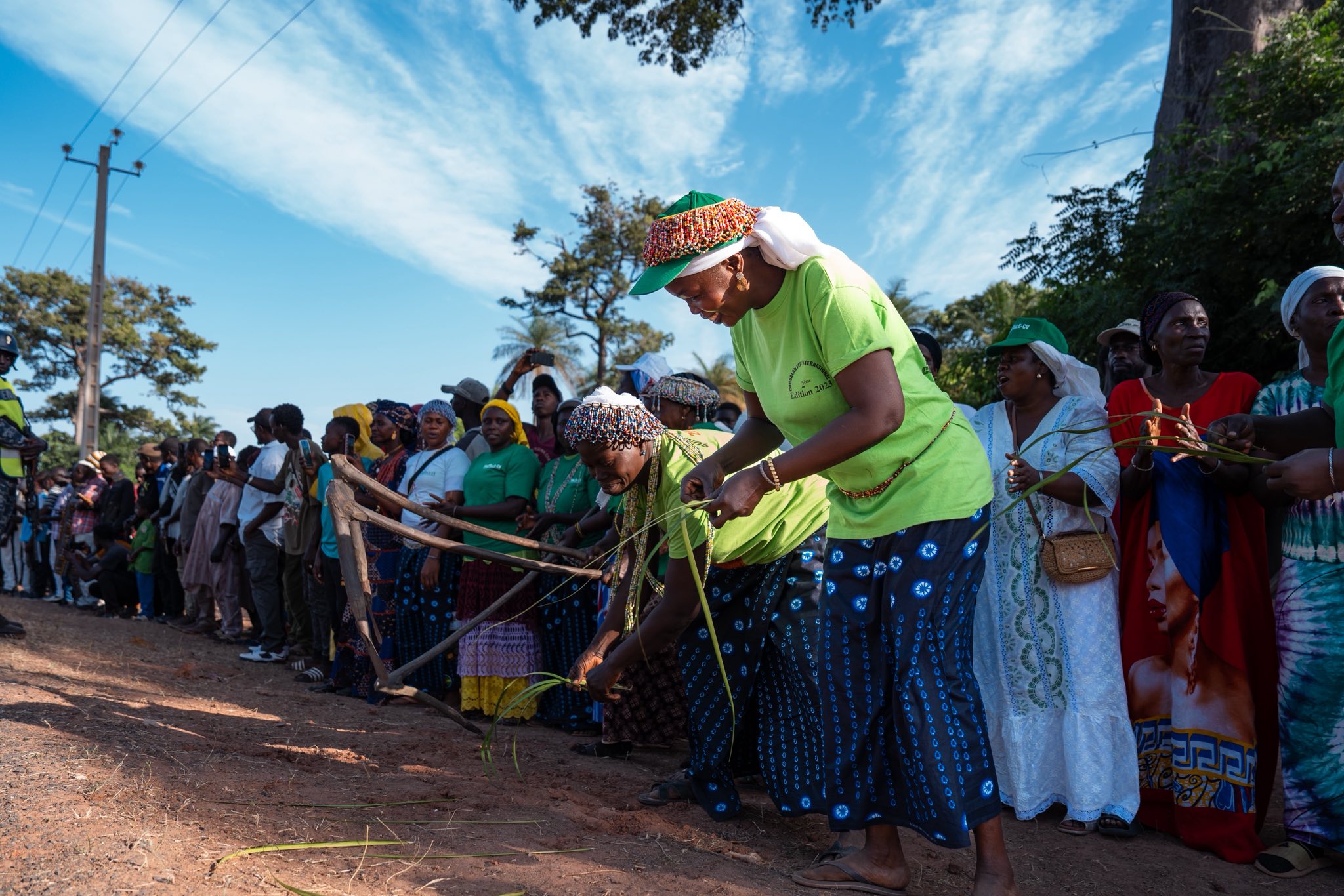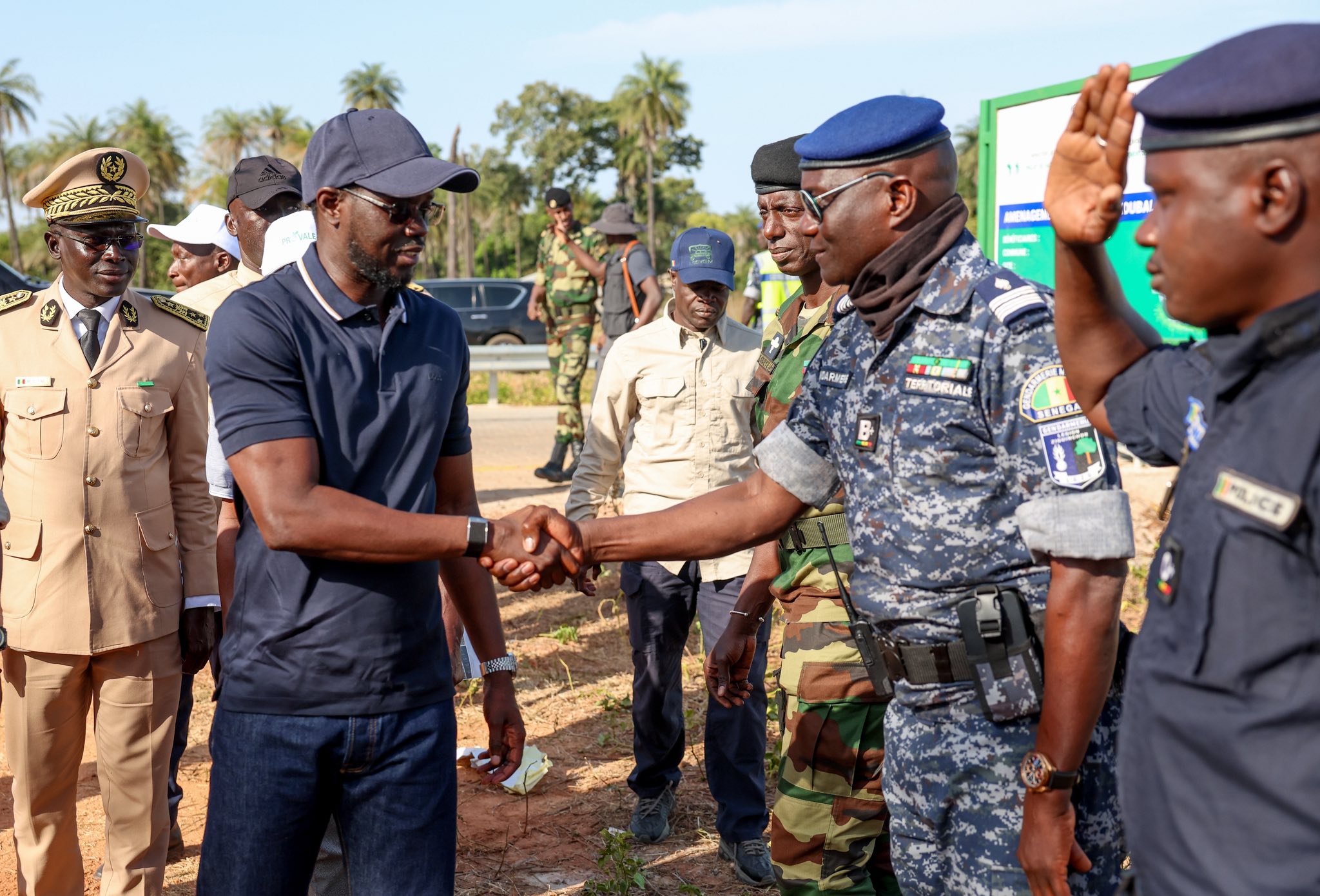
In the afternoon of the second day of his economic tour in Casamance, the President of the Republic, Bassirou Diomaye Faye, visited Coubalan, in the Bignona Department, for a visit focused on the agricultural component, centered on the anti-salinity dike built as part of the Water Resources Development Project for Value Chain Development.
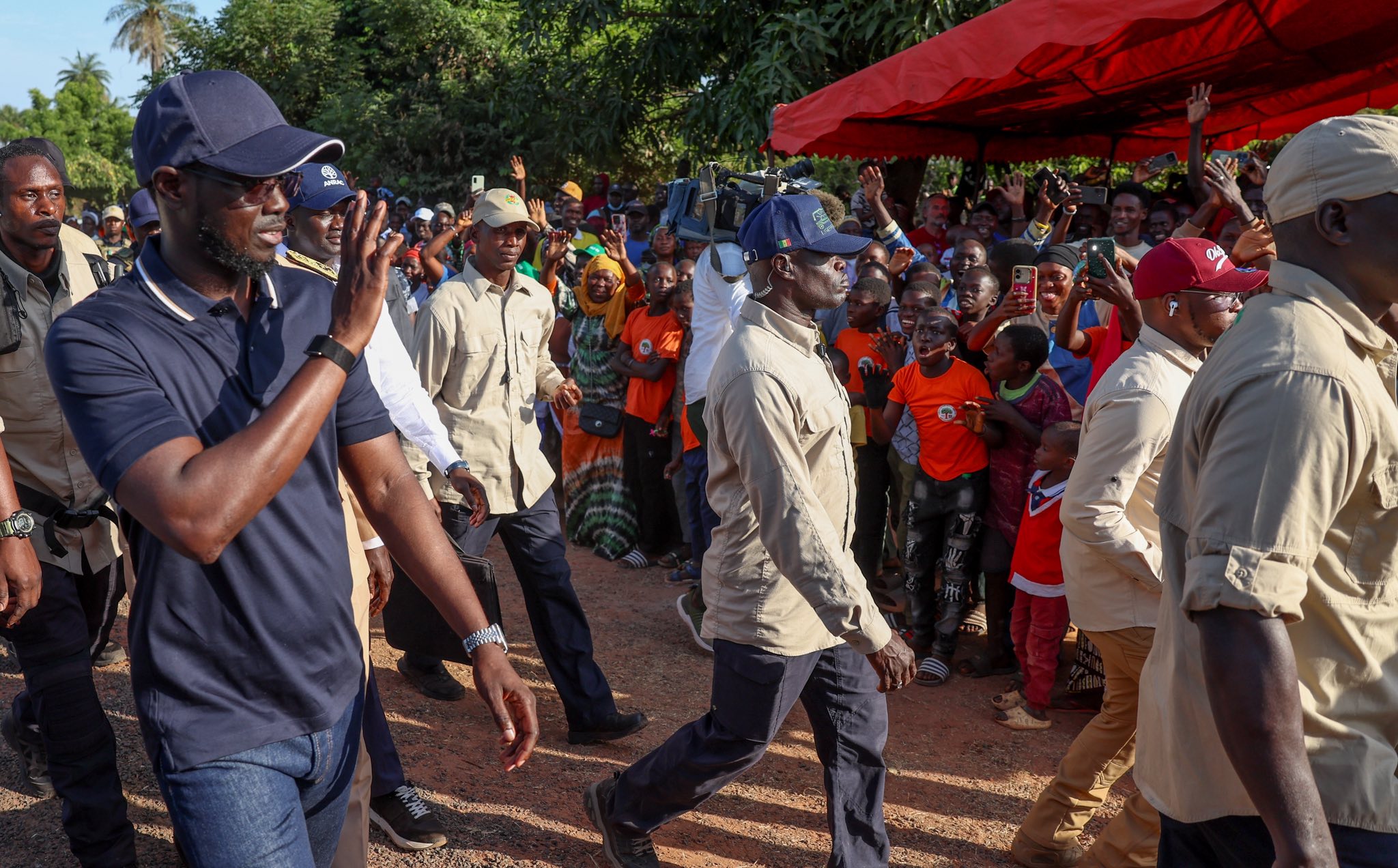
The Head of State was welcomed with strong popular enthusiasm during a ceremony marked by warmth and conviviality, highlighted by an atmosphere of kinship between the Diola and Serer communities a living symbol of social cohesion and lasting peace.
This major infrastructure has made it possible to reclaim nearly 550 hectares of agricultural land that had previously become unsuitable for cultivation due to salinization. It directly benefits 350 households from surrounding villages, who have been able to resume rice farming and revive their income-generating activities.
The President of the Republic expressed his satisfaction at witnessing the effective resumption of agricultural activities and announced the establishment of community agricultural cooperatives aimed at better supporting local populations, structuring production, and strengthening local value chains.
Since 1960, this is the first time the locality of Coubalan has received a visit from a President of the Republic. On this occasion, the populations widely expressed their satisfaction and gratitude. Through the mayor, Mamadou Lamine Sora, they also raised social concerns, particularly in the area of health, including the construction of a health center and the availability of medicalized ambulances, requests duly noted by the Head of State.
Beyond hydraulic development, the Coubalan anti-salinity dike represents a lever for economic and social transformation, contributing to food security, increased agricultural incomes, job creation, and the sustainable improvement of living conditions in rural areas.
This visit illustrates the State’s constant commitment to resilient, productive, and inclusive agriculture, in the service of territorial development, national cohesion, and food sovereignty.